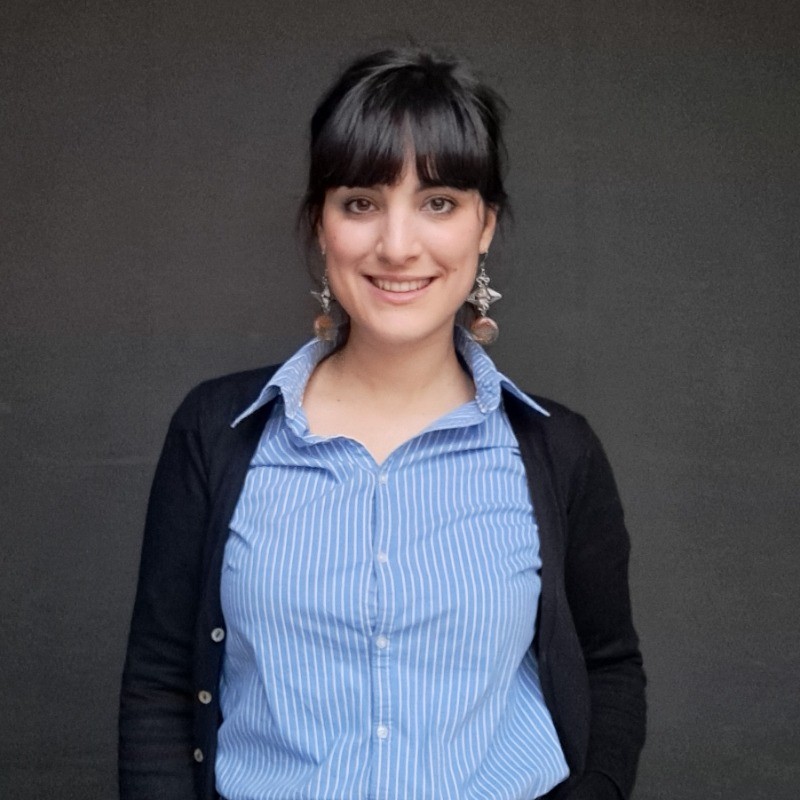
I am a PhD candidate at the Paul Scherrer Institute and ETH Zurich, working at the intersection of climate mitigation, environmental systems analysis, and responsible innovation. My research focuses on lifecycle and prospective lifecycle assessment of carbon dioxide removal (CDR) pathways. I combine environmental assessment with biophysical and "region specific" perspectives to evaluate net climate benefits, resource requirements, co-benefits, environmental side effects, and sustainability in the longer term. I am especially interested in translating systems analysis into policy relevant evidence, and credible net zero strategies through interdisciplinary collaboration.
Maria's main research/work interest areas:
- How carbon dioxide removal technologies compare with one another at small and larger scales of implementation, where is best to implement which combination of CDR
- What are the trade offs of climate change mitigation through CDR and what can be done to minimize them
- Integration into foreground modelling of the interaction that happens in between the CDR technology at hand and the receiving medium (land, water etc)
- Techno economic assessment, climate policy pathways, and credible net zero strategies
- In the future I would like to focus on bridging science and decision making in policy and business
Maria's favorite cities and why:
I love cities that achieve a thoughtful balance between nature and infrastructure. I especially appreciate authentic places where traces of history remain visible and are embedded in the architecture and everyday life. I like to be able to see the story a city tells me just by walking through it. My ideal city supports a healthy lifestyle, with peace, safety, professional opportunities, and access to culture and leisure all within easy reach. In general, I prefer small or medium sized cities because they feel easier to navigate and less overwhelming. I can also enjoy larger cities, as long as they are well organized and still feel calm and accessible.
Any collaboration interests you'd like to share with SUS members?
I would be interested to collaborate with researchers that explore carbon dioxide removal technologies. In addition to this, I am also interested in bridging science and decision making in sustainability related policy and business models.
How did you get interested in cities research? What drew you to sustainability topics?
My interest in sustainability comes from my appreciation for life in all its shapes and forms. I dream of a world where humans, animals, and nature are respected, and where these needs are better balanced. I have always enjoyed identifying patterns, connecting concepts and systems, and finding ways to fix things. Later, I realized that this is also one of the reasons I was drawn to lifecycle assessment. LCA looks at a system as a whole, helps identify the main hotspots, and gives us a basis for testing possible solutions. I like that it does not stop at pointing out problems, but also helps us understand where change is possible. For me, there is always light at the end of the tunnel.
Recent publications
Prospective site-specific life cycle assessment of ocean alkalinity enhancement
DOI: https://doi.org/10.1088/1748-9326/ae5a4e
In this study we combine prospective lifecycle assessment with a high-resolution ocean model to compare five ocean alkalinity enhancement (OAE) pathways in Halifax Harbour, Canada. The study shows why the location, choice of materials, carbon uptake efficiency, and future energy and supply chains all matter when evaluating whether ocean alkalinity enhancement can deliver a real climate benefit without shifting impacts elsewhere. Personally I see the value of this work on the fact that bridges together LCA and oceanography, making these two communities aware about the need to expand these types of collaboration and the importance of accounting for ocean feedbacks when evaluating OAE and other related CDR pathways that are implemented in ocean and sea waters. It goes without saying that I also appreciate the effort that was put in making the paper as explicit as possible when it comes to explaining the "how" of integrating ocean modelling into LCA foreground modelling (although a part of that "how" had to go into the SI file due to word count limitations :-D)
A sequential gated research framework for addressing potential impacts of marine carbon dioxide removal on fisheries, aquaculture, and Indigenous communities
DOI: https://doi.org/10.1093/icesjms/fsag076
This collaborative paper is a beautiful example of work that brings different disciplines together in the context of marine carbon dioxide removal. We propose a step-by-step framework for assessing the wider impacts of these technologies, from the early planning stages to field trials and possible deployment. The paper highlights the importance of considering marine ecosystems, fisheries, aquaculture, and Indigenous and coastal communities throughout the research process, rather than focusing only on whether a method removes carbon successfully. I was especially happy to contribute by highlighting the value of including LCA from the beginning, so that potential bottlenecks and unintended impacts can be identified before they become locked into the development of a technology.