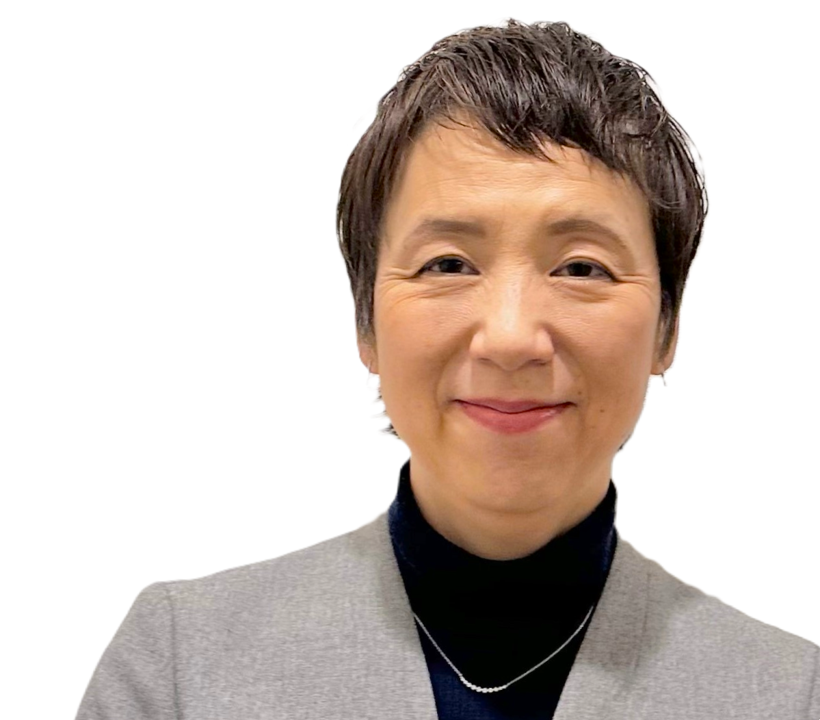
Kiyo Kurisu is an Associate Professor in the Department of Urban Engineering, Graduate School of Engineering, The University of Tokyo. Kiyo is an interdisciplinary researcher specializing in environmentally responsible behavior.
Kiyo's main research/work interest areas:
- Information provision to promote environmentally responsible behavior
- Sustainable food systems
- Consumer acceptance of environmental policies
- Assessment of regional vulnerability for climate change adaptation
Kiyo's favorite cities and why:
My favorite city is Bangkok, Thailand. When I first visited in 2005, I was captivated by its chaotic atmosphere and the energy of its people. Twenty years later, when I visit Bangkok, I feel the kindness of the Thai people, known as the "Land of Smiles," the delicious food, and the connections I've made with many Thai students who have graduated from our department.
Any collaboration interests you'd like to share with SUS members?
In my laboratory, we conduct people-centered research aimed at building a sustainable society. Our research spans multiple scales—from national and regional systems to individual consumption behaviors—but all of our work shares a common focus on human actors as key agents of change.
How did you get interested in cities research? What drew you to sustainability topics?
My research focuses on quantifying the environmental impacts associated with human consumption behaviors, while exploring effective strategies to promote more sustainable choices. To achieve this, I combine engineering-based approaches with investigations into psychological factors influencing behavior, as well as the effects of information provision and communication.
Recent publications
Kurisu, K., Hasegawa, Y., & Fukushi, K. (2026) Can simply illustrated life cycle-based environmental information help promote Life Cycle Thinking? Cleaner and Responsible Consumption, 22, 100431. https://doi.org/10.1016/j.clrc.2026.100431
Our previous research (Kurisu et al., 2021, Cleaner and Responsible Consumption, 3, 100033. https://doi.org/10.1016/j.clrc.2021.100033) developed a board game to promote Life Cycle Thinking (LCT) among university students in Japan, demonstrating its effectiveness in improving LCT literacy. Building on this work, this study examined whether simpler information provision could also enhance LCT literacy by developing four types of illustrated materials, each designed to fit on a single smartphone screen. The materials covered key aspects of LCT across five domains of daily life: transportation, clothing, food, shopping, and other daily activities. Using a revised 15-item assessment instrument based on our previous study, we evaluated their effectiveness.