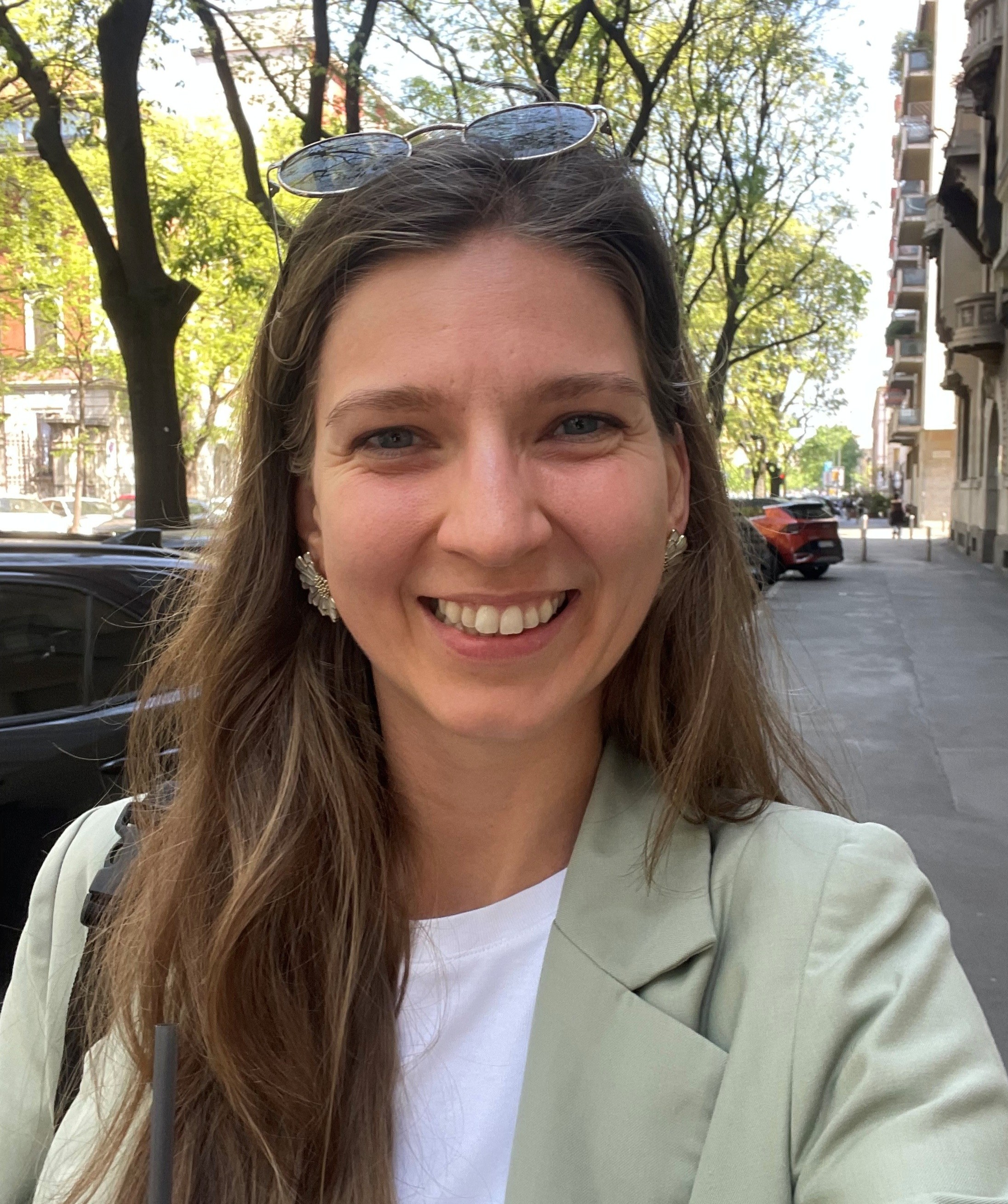
Hello! I'm Kamila, currently working as a postdoctoral researcher at ETH Zürich. My research focuses on building and product lifetimes: how long they last, why, how they can be extended, and what that means for material stocks, resource use, and environmental impact. What I particularly enjoy about this area is its interdisciplinarity — so far, my work has brought me into conversation with sociologists, anthropologists, demographers, architects, urban planners, and epidemiologists. Outside research, I'm actively involved in the association representing PhD students and postdocs at ETH Zürich, where I get to see firsthand how institutions work and how we can impact local decision-making to create a more sustainable future.
Kamila's main research/work interest areas:
- Dynamic material stock modelling
- Lifetime estimation methods for buildings and products
- Circular economy strategies for lifetime extension
- Interdisciplinary approaches to understanding drivers of consumption
- Science-policy translation
Kamila's favorite cities and why:
Zurich, Switzerland. Walkable, green, clean, with efficient public transport and proximity to nature: forests for running, lakes for swimming, and mountains for hiking and skiing. Everything I need from a city!
Any collaboration interests you'd like to share with SUS members?
I'm keen to connect with researchers working on lifetime estimation at the building level (demolition) or building component level (renovation and replacement cycles). I'm also happy to exchange more broadly on longevity in the context of urban metabolism, science-policy interface, and interdisciplinary research approaches.
How did you get interested in cities research? What drew you to sustainability topics?
My entry point was actually products rather than buildings — my PhD explored why appliances are discarded earlier than necessary, and how policy could change that. In my postdoc, I started working on buildings and soon found that they pose the same fundamental questions, but at a scale and complexity that makes them even more policy-relevant. That policy relevance turned out to be more than academic: through my involvement in the association representing PhD students and postdocs at ETH Zürich, I contributed feedback to the city planning policy, and realised that research expertise can translate into a real voice in local planning decisions.
Recent publications
"Krych et al. (2025). The ""nature"" and ""nurture"" of product lifetimes in dynamic stock modeling. This paper tackles the complexity of lifetime modelling, proposing a framework distinguishing between inherent product durability (""nature"") and the external factors that shape how long things actually stay in use (""nurture""). https://doi.org/10.1111/jiec.13586
I also have a paper currently in review under the title ""How long do buildings live? A systematic review and meta-analysis of global building lifetimes"". This work synthesises empirical lifetime estimates across around 50 global studies and examines what drives the variation. Stay tuned, and feel free to follow me on LinkedIn to hear when it comes out!"