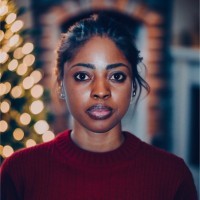
A passionate researcher driven by a deep passion for understanding and exploring sustainable infrastructure and transforming building practices across developing regions. My work dives into exploring low-carbon construction materials, shaping embodied carbon policies, and unveiling the environmental impacts of deconstruction processes. What truly excites me is understanding how material use differs around the world and how policy and design decisions ripple through a building’s entire life cycle to affect its carbon footprint.
Through my research, I strive to produce evidence that not only pushes for more resilient and resource-efficient construction but also champions equity especially in fast-growing regions like Nigeria where the need for sustainable infrastructure is urgent. I am wholeheartedly committed to conducting research that sparks real change, guiding policies, and practical actions to help usher in meaningful sustainability transitions. My ambition is to see a construction future where every material choice empowers communities and protects our planet for generations to come.
Christiana's main research/work interest areas:
- Low-carbon and alternative construction materials for emerging economies
- Embodied carbon measurement, benchmarking, and policy development
- Environmental and lifecycle impacts of deconstruction and material reuse
- International comparative construction practices and material intensity
- Sustainable infrastructure solutions for the developing world
Christiana's favorite cities and why:
One of my favorite cities is Lagos, because it embodies the energy, complexity, and innovation potential of the developing world. I also admire Toronto for its diversity, research ecosystem, and commitment to sustainability. Some of the other cities I hold close to my heart would be Cape Town and Geneva, each inspiring me in their own unique way. Cape Town captivates me with its breathtaking natural beauty, rich cultural tapestry, and the way its urban life weaves together environment, community, and infrastructure so seamlessly. my visit to Geneva last year made me fall in love with the city. I was particularly impressed with its global perspective, strong governance, and steadfast commitment to sustainability. it showed how thoughtful urban planning can nurture a high quality of life for all.
Any collaboration interests you'd like to share with SUS members?
I am open to collaborations on embodied carbon research, comparative material-intensity studies, low-carbon construction material innovation, and policy development for sustainable infrastructure in the Global South. I also welcome partnerships exploring deconstruction, circularity, and lifecycle environmental assessment.
How did you get interested in cities research? What drew you to sustainability topics?
My passion for cities and the built environment grew from living amidst the vibrant, ever-changing landscapes of rapidly urbanizing regions in Nigeria. Seeing both the promise and the pressure of this transformation sparked my curiosity about how people shape their environments and how those choices, in turn, shape the planet. Over time, I became deeply committed to sustainability, realizing that every material and construction decision carries real consequences for our shared future.
This calling led me to study how materials are used in construction the reasoning behind these choices, their impact on embodied carbon, and how we can build in harmony with climate goals. My research is guided by hope: to make building more responsible, resilient, and responsive, especially in places where growth is not just happening swiftly but is profoundly needed.
Recent publications
The Differences in How We Build: Material Use and Intensity in Small Multi-Units’ Buildings in Brazil, Canada, Greece, Nigeria and Switzerland. This paper compares material intensity across five countries and highlights how design choices, construction practices, and building programs significantly influence resource use.
https://doi-org.myaccess.library.utoronto.ca/10.1016/j.resconrec.2025.108548